> All in One 586

Ads

Thursday, July 30, 2020

Getting the Most Out of Variable Fonts on Google Fonts

I have spent the past several years working (alongside a bunch of super talented people) on a font family called Recursive Sans & Mono, and it just launched officially on Google Fonts!

Wanna try it out super fast? Here’s the embed code to use the full Recursive variable font family from Google Fonts (but you will get a lot more flexibility & performance if you read further!)

<link href="https://fonts.googleapis.com/css2?family=Recursive:slnt,wght,CASL,CRSV,MONO@-15..0,300..1000,0..1,0..1,0..1&display=swap" rel="stylesheet">
Recursive is made for code, websites, apps, and more.
Recursive Mono has both Linear and Casual styles for different “voices” in code, along with cursive italics if you want them — plus a wider weight range for monospaced display typography.
Recursive Sans is proportional, but unlike most proportional fonts, letters maintain the same width across styles for more flexibility in UI interactions and layout.

I started Recursive as a thesis project for a type design masters program at KABK TypeMedia, and when I launched my type foundry, Arrow Type, I was subsequently commissioned by Google Fonts to finish and release Recursive as an open-source, OFL font.

You can see Recursive and learn more about it what it can do at recursive.design

Recursive is made to be a flexible type family for both websites and code, where its main purpose is to give developers and designers some fun & useful type to play with, combining fresh aesthetics with the latest in font tech.

First, a necessary definition: variable fonts are font files that fit a range of styles inside one file, usually in a way that allows the font user to select a style from a fluid range of styles. These stylistic ranges are called variable axes, and can be parameters, like font weight, font width, optical size, font slant, or more creative things. In the case of Recursive, you can control the “Monospacedness” (from Mono to Sans) and “Casualness” (between a normal, linear style and a brushy, casual style). Each type family may have one or more of its own axes and, like many features of type, variable axes are another design consideration for font designers.

You may have seen that Google Fonts has started adding variable fonts to its vast collection. You may have read about some of the awesome things variable fonts can do. But, you may not realize that many of the variable fonts coming to Google Fonts (including Recursive) have a lot more stylistic range than you can get from the default Google Fonts front end.

Because Google Fonts has a huge range of users — many of them new to web development — it is understandable that they’re keeping things simple by only showing the “weight” axis for variable fonts. But, for fonts like Recursive, this simplification actually leaves out a bunch of options. On the Recursive page, Google Fonts shows visitors eight styles, plus one axis. However, Recursive actually has 64 preset styles (also called named instances), and a total of five variable axes you can adjust (which account for a slew of more potential custom styles).

Recursive can be divided into what I think of as one of four “subfamilies.” The part shown by Google Fonts is the simplest, proportional (sans-serif) version. The four Recursive subfamilies each have a range of weights, plus Italics, and can be categorized as:

  • Sans Linear: A proportional, “normal”-looking sans-serif font. This is what gets shown on the Google Fonts website.
  • Sans Casual: A proportional “brush casual” font
  • Mono Linear: A monospace “normal” font
  • Mono Casual: A monospace “brush casual” font

This is probably better to visualize than to describe in words. Here are two tables (one for Sans, the other for Mono) showing the 64 named instances:

But again, the main Google Fonts interface only provides access to eight of those styles, plus the Weight axis:

Recursive has 64 preset styles — and many more using when using custom axis settings — but Google Fonts only shows eight of the preset styles, and just the Weight axis of the five available variable axes.

Not many variable fonts today have more than a Weight axis, so this is an understandable UX choice in some sense. Still, I hope they add a little more flexibility in the future. As a font designer & type fan, seeing the current weight-only approach feels more like an artificial flattening than true simplification — sort of like if Google Maps were to “simplify” maps by excluding every road that wasn’t a highway.

Luckily, you can still access the full potential of variable fonts hosted by Google Fonts: meet the Google Fonts CSS API, version 2. Let’s take a look at how you can use this to get more out of Recursive.

But first, it is helpful to know a few things about how variable fonts work.

How variable fonts work, and why it matters

If you’ve ever worked with photos on the web then you know that you should never serve a 9,000-pixel JPEG file when a smaller version will do. Usually, you can shrink a photo down using compression to save bandwidth when users download it.

There are similar considerations for font files. You can often reduce the size of a font dramatically by subsetting the characters included in it (a bit like cropping pixels to just leave the area you need). You can further compress the file by converting it into a WOFF2 file (which is a bit like running a raster image file though an optimizer tool like imageOptim). Vendors that host fonts, like Google Fonts, will often do these things for you automatically.

Now, think of a video file. If you only need to show the first 10 seconds of a 60-second video, you could trim the last 50 seconds to have a much small video file. 

Variable fonts are a bit like video files: they have one or more ranges of information (variable axes), and those can often either be trimmed down or “pinned” to a certain location, which helps to reduce file size. 

Of course, variable fonts are nothing like video files. Fonts record each letter shape in vectors, (similar to SVGs store shape information). Variable fonts have multiple “source locations” which are like keyframes in an animation. To go between styles, the control points that make up letters are mathematically interpolated between their different source locations (also called deltas). A font may have many sets of deltas (at least one per variable axis, but sometimes more). To trim a variable font, then, you must trim out unneeded deltas.

As a specific example, the Casual axis in Recursive takes letterforms from “Linear” to “Casual” by interpolating vector control points between two extremes: basically, a normal drawing and a brushy drawing. The ampersand glyph animation below shows the mechanics in action: control points draw rounded corners at one extreme and shift to squared corners on the other end.

Generally, each added axis doubles the number of drawings that must exist to make a variable font work. Sometimes the number is more or less – Recursive’s Weight axis requires 3 locations (tripling the number of drawings), while its Cursive axis doesn’t require extra locations at all, but actually just activates different alternate glyphs that already exist at each location. But, the general math is: if you only use opt into fewer axes of a variable font, you will usually get a smaller file.

When using the Google Fonts API, you are actually opting into each axis. This way, instead of starting with a big file and whittling it down, you get to pick and choose the parts you want.

Variable axis tags

If you’re going to use the Google Fonts API, you first need to know about font axes abbreviations so you can use them yourself.

Variable font axes have abbreviations in the form of four-letter “tags.” These are lowercase for industry-standard axes and uppercase for axes invented by individual type designers (also called “custom” or “private” axes). 

There are currently five standard axes a font can include: 

  • wght – Weight, to control lightness and boldness
  • wdth – Width, to control overall letter width
  • opsz – Optical Size, to control adjustments to design for better readability at various sizes
  • ital – Italic, generally to switch between separate upright/italic designs
  • slnt – Slant, generally to control upright-to-slanted designs with intermediate values available

Custom axes can be almost anything. Recursive includes three of them — Monospace (MONO), Casual (CASL), and Cursive (CRSV)  — plus two standard axes, wght and slnt.

Google Fonts API basics

When you configure a font embed from the Google Fonts interface, it gives you a bit of HTML or CSS which includes a URL, and this ultimately calls in a CSS document that includes one or more @font-face rules. This includes things like font names as well as links to font files on Google servers.

This URL is actually a way of calling the Google Fonts API, and has a lot more power than you might realize. It has a few basic parts: 

  1. The main URL, specifying the API (https://fonts.googleapis.com/css2)
  2. Details about the fonts you are requesting in one or more family parameters
  3. A font-display property setting in a display parameter

As an example, let’s say we want the regular weight of Recursive (in the Sans Linear subfamily). Here’s the URL we would use with our CSS @import:

@import url('https://fonts.googleapis.com/css2?family=Recursive&display=swap');

Or we can link it up in the <head> of our HTML:

<link href="https://fonts.googleapis.com/css2?family=Recursive&display=swap" rel="stylesheet">

Once that’s in place, we can start applying the font in CSS:

body {
  font-family: 'Recursive', sans-serif;
}

There is a default value for each axis:

  • MONO 0 (Sans/proportional)
  • CASL 0 (Linear/normal)
  • wght 400 (Regular)
  • slnt 0 (upright)
  • CRSV 0 (Roman/non-cursive lowercase)

Choose your adventure: styles or axes

The Google Fonts API gives you two ways to request portions of variable fonts:

  1. Listing axes and the specific non-default values you want from them
  2. listing axes and the ranges you want from them

Getting specific font styles

Font styles are requested by adding parameters to the Google Fonts URL. To keep the defaults on all axes but use get a Casual style, you could make the query Recursive:CASL@1 (this will serve Recursive Sans Casual Regular). To make that Recursive Mono Casual Regular, specify two axes before the @ and then their respective values (but remember, custom axes have uppercase tags):

https://fonts.googleapis.com/css2?family=Recursive:CASL,MONO@1,1&display=swap

To request both Regular and Bold, you would simply update the family call to Recursive:wght@400;700, adding the wght axis and specific values on it:

https://fonts.googleapis.com/css2?family=Recursive:wght@400;700&display=swap

A very helpful thing about Google Fonts is that you can request a bunch of individual styles from the API, and wherever possible, it will actually serve variable fonts that cover all of those requested styles, rather than separate font files for each style. This is true even when you are requesting specific locations, rather than variable axis ranges — if they can serve a smaller font file for your API request, they probably will.

As variable fonts can be trimmed more flexibility and efficiently in the future, the files served for given API requests will likely get smarter over time. So, for production sites, it may be best to request exactly the styles you need.

Where it gets interesting, however, is that you can also request variable axes. That allows you to retain a lot of design flexibility without changing your font requests every time you want to use a new style.

Getting a full variable font with the Google Fonts API

The Google Fonts API seeks to make fonts smaller by having users opt into only the styles and axes they want. But, to get the full benefits of variable fonts (more design flexibility in fewer files), you should use one or more axes. So, instead of requesting single styles with Recursive:wght@400;700, you can instead request that full range with Recursive:wght@400..700 (changing from the ; to .. to indicate a range), or even extending to the full Recursive weight range with Recursive:wght@300..1000 (which adds very little file size, but a whole lot of extra design oomph).

You can add additional axes by listing them alphabetically (with lowercase standard axes first, then uppercase custom axes) before the @, then specifying their values or ranges after that in the same order. For instance, to add the MONO axis and the wght axis, you could use Recursive:wght,MONO@300..1000,0..1 as the font query.

Or, to get the full variable font, you could use the following URL:

https://fonts.googleapis.com/css2?family=Recursive:slnt,wght,CASL,CRSV,MONO@-15..0,300..1000,0..1,0..1,0..1&display=swap

Of course, you still need to put that into an HTML link, like this:

<link href="https://fonts.googleapis.com/css2?family=Recursive:slnt,wght,CASL,CRSV,MONO@-15..0,300..1000,0..1,0..1,0..1&display=swap" rel="stylesheet">

Customizing it further to balance flexibility and filesize 

While it can be tempting to use every single axis of a variable font, it’s worth remembering that each additional axis adds to the overall files ize. So, if you really don’t expect to use an axis, it makes sense to leave it off. You can always add it later.

Let’s say you want Recursive’s Mono Casual styles in a range of weights,. You could use Recursive:wght,CASL,MONO@300..1000,1,1 like this:

<link href="https://fonts.googleapis.com/css2?family=Recursive:CASL,MONO,wght@1,1,300..1000&display=swap" rel="stylesheet">

You can, of course, add multiple font families to an API call with additional family parameters. Just be sure that the fonts are alphabetized by family name.

<link href="https://fonts.googleapis.com/css2?family=Inter:slnt,wght@-10..0,100..900?family=Recursive:CASL,MONO,wght@1,1,300..1000&display=swap" rel="stylesheet">

Using variable fonts

The standard axes can all be controlled with existing CSS properties. For instance, if you have a variable font with a weight range, you can specify a specific weight with font-weight: 425;. A specific Slant can be requested with font-style: oblique 9deg;. All axes can be controlled with font-variation-settings. So, if you want a Mono Casual very-heavy style of Recursive (assuming you have called the full family as shown above), you could use the following CSS:

body {
 font-weight: 950;
 font-variation-settings: 'MONO' 1, 'CASL' 1;
}

Something good to know: font-variation-settings is much nicer to use along with CSS custom properties

Another useful thing to know is that, while you should be able to activate slant with font-style: italic; or font-style: oblique Xdeg;, browser support for this is inconsistent (at least at the time of this writing), so it is useful to utilize font-variation-settings for the Slant axis, as well.

You can read more specifics about designing with variable fonts at VariableFonts.io and in the excellent collection of CSS-Tricks articles on variable fonts.

Nerdy notes on the performance of variable fonts

If you were to using all 64 preset styles of Recursive as separate WOFF2 files (with their full, non-subset character set), it would be total of about 6.4 MB. By contrast, you could have that much stylistic range (and everything in between) at just 537 KB. Of course, that is a slightly absurd comparison — you would almost never actually use 64 styles on a single web page, especially not with their full character sets (and if you do, you should use subsets and unicode-range).

A better comparison is Recursive with one axis range versus styles within that axis range. In my testing, a Recursive WOFF2 file that’s subset to the “Google Fonts Latin Basic” character set (including only characters to cover English and western European languages), including the full 300–1000 Weight range (and all other axes “pinned” to their default values) is 60 KB. Meanwhile, a single style with the same subset is 25 KB. So, if you use just three weights of Recursive, you can save about 15 KB by using the variable font instead of individual files.

The full variable font as a subset WOFF2 clocks in at 281 KB which is kind of a lot for a font, but not so much if you compare it to the weight of a big JPEG image. So, if you assume that individual styles are about 25 KB, if you plan to use more than 11 styles, you would be better off using the variable font.

This kind of math is mostly an academic exercise for two big reasons:

  1. Variable fonts aren’t just about file size.The much bigger advantage is that they allow you to just design, picking the exact font weights (or other styles) that you want. Is a font looking a little too light? Bump up the font-weight a bit, say from 400 to 425!
  2. More importantly (as explained earlier), if you request variable font styles or axes from Google Fonts, they take care of the heavy lifting for you, sending whatever fonts they deem the most performant and useful based on your API request and the browsers visitors access your site from.

So, you don’t really need to go downloading fonts that the Google Fonts API returns to compare their file sizes. Still, it’s worth understanding the general tradeoffs so you can best decide when to opt into the variable axes and when to limit yourself to a couple of styles.

What’s next?

Fire up CodePen and give the API a try! For CodePen, you will probably want to use the CSS @import syntax, like this in the CSS panel:

@import url('https://fonts.googleapis.com/css2?family=Recursive:CASL,CRSV,MONO,slnt,wght@0..1,0..1,0..1,-15..0,300..1000&display=swap');

It is apparently better to use the HTML link syntax to avoid blocking parallel downloads of other resources. In CodePen, you’d crack open the Pen settings, select HTML, then drop the <link> in the HTML head settings.

Or, hey, you can just fork my CodePen and experiment there:

Take an API configuration shortcut

If you are want to skip the complexity of figuring out exact API calls and looking to opt into variable axes of Recursive and make semi-advanced API calls, I have put together a simple configuration tool on the Recursive minisite (click the “Get Recursive” button). This allows you to quickly select pinned styles or variable ranges that you want to use, and even gives estimates for the resulting file size. But, this only exposes some of the API’s functionality, and you can get more specific if you want. It’s my attempt to get people using the most stylistic range in the smallest files, taking into account the current limitations of variable font instancing.

Use Recursive for code

Also, Recursive is actually designed first as a font to use for code. You can use it on CodePen via your account settings. Better yet, you can download and use the latest Recursive release from GitHub and set it up in any code editor.

Explore more fonts!

The Google Fonts API doc helpfully includes a (partial) list of variable fonts along with details on their available axis ranges. Some of my favorites with axes beyond just Weight are Crimson Pro (ital, wght), Work Sans (ital, wght), Encode Sans (wdth, wght), and Inter (slnt, wght). You can also filter Google Fonts to show only variable fonts, though most of these results have only a Weight axis (still cool and useful, but don’t need custom URL configuration).

Some more amazing variable fonts are coming to Google Fonts. Some that I am especially looking forward to are:

  • Fraunces: “A display, “Old Style” soft-serif typeface inspired by the mannerisms of early 20th century typefaces such as Windsor, Souvenir, and the Cooper Series”
  • Roboto Flex: Like Roboto, but withan extensive ranges of Weight, Width, and Optical Size
  • Crispy: A creative, angular, super-flexible variable display font
  • Science Gothic: A squarish sans “based closely on Bank Gothic, a typeface from the early 1930s—but a lowercase, design axes, and language coverage have been added”

And yes, you can absolutely download and self-host these fonts if you want to use them on projects today. But stay tuned to Google Fonts for more awesomely-flexible typefaces to come!

Of course, the world of type is much bigger than open-source fonts. There are a bunch of incredible type foundries working on exciting, boundary-pushing fonts, and many of them are also exploring new & exciting territory in variable fonts. Many tend to take other approaches to licensing, but for the right project, a good typeface can be an extremely good value (I’m obviously biased, but for a simple argument, just look at how much typography strengthens brands like Apple, Stripe, Google, IBM, Figma, Slack, and so many more). If you want to feast your eyes on more possibilities and you don’t already know these names, definitely check out DJR, OHno, Grilli, XYZ, Dinamo, Typotheque, Underware, Bold Monday, and the many very-fun WIP projects on Future Fonts. (I’ve left out a bunch of other amazing foundries, but each of these has done stuff I particularly love, and this isn’t a directory of type foundries.)

Finally, some shameless plugs for myself: if you’d like to support me and my work beyond Recursive, please consider checking out my WIP versatile sans-serif Name Sans, signing up for my (very) infrequent newsletter, and giving me a follow on Instagram.


The post Getting the Most Out of Variable Fonts on Google Fonts appeared first on CSS-Tricks.

You can support CSS-Tricks by being an MVP Supporter.


from CSS-Tricks https://ift.tt/30djpnF
via IFTTT

Wednesday, July 29, 2020

Rivian to begin deliveries of electric pickup truck in June 2021

Rivian has started to run a pilot production line at its factory in Normal, Illinois, as the electric vehicle startup prepares to bring its pickup truck and SUV to market in summer 2021.

In an email sent to prospective customers, Rivian said deliveries of its R1T electric pickup truck will begin in June 2021. Deliveries of the R1S electric SUV will start in August 2021.

Rivian said in May that deliveries of the R1T and R1S would be pushed to 2021. It wasn’t clear — until today’s email — exactly when deliveries would begin.

Running a pilot production line is a critical step necessary to root out potential problems ahead of a full production launch. The two vehicles were supposed to come to market at the end of 2020. That timeline was extended to 2021 after the COVID-19 pandemic prompted Rivian to suspend construction work on the factory, a former Mitsubishi plant that the company acquired in 2017. The factory was where Mitsubishi in a joint venture with Chrysler Corporation called Diamond-Star Motors produced the Mitsubishi Eclipse, Plymouth Laser and Dodge Avenger, among others.

The factory will produce its R1T and R1S electric vehicles for consumers, as well as 100,000 delivery vans for Amazon. Rivian has said it is still on track to begin deliveries of electric vans built for Amazon in early 2021. About 10,000 of these electric vans will be on the road as early as 2022, and all 100,000 vehicles will be on the road by 2030, Amazon previously said.


from Amazon – TechCrunch https://ift.tt/2BraqW7
via IFTTT

Partly Cloudy today!


With a high of F and a low of 60F. Currently, it's 73F and Clear outside.

Current wind speeds: 10 from the North

Pollen: 0

Sunrise: July 29, 2020 at 05:49PM

Sunset: July 30, 2020 at 08:05AM

UV index: 0

Humidity: 42%

via https://ift.tt/2livfew

July 30, 2020 at 10:00AM

Dark Ages of the Web

A very fun jaunt through the early days of front-end web development. They are open to pull requests, so submit one if you’re into this kind of fun chronicling of our weird history!

That CSS3 Button generator really hits home. 😬

Direct Link to ArticlePermalink


The post Dark Ages of the Web appeared first on CSS-Tricks.

You can support CSS-Tricks by being an MVP Supporter.


from CSS-Tricks https://ift.tt/3ijKMDy
via IFTTT

Daily Crunch: Tech CEOs face Congress

U.S. tech giants face antitrust scrutiny, Spotify has a mixed quarter and at-home fitness startup Tempo raises funding. This is your Daily Crunch for July 29, 2020.

The big story: Tech CEOs face Congress

Amazon’s Jeff Bezos, Apple’s Tim Cook, Facebook’s Mark Zuckerberg and Google’s Sundar Pichai all appeared remotely this afternoon before the House Judiciary Antitrust Subcommittee.

Different representatives seemed to focused on very different issues: Republicans repeatedly returned to the question of whether the large tech platforms are suppressing conservative viewpoints, while Democrats seemed more concerned about potentially anticompetitive behavior.

For example, citing newly revealed emails sent by Zuckerberg to other Facebook executives, Rep. Jerry Nadler declared, “Facebook saw Instagram as a powerful threat that could siphon business away from Facebook so rather than compete with it, Facebook bought it.” And Rep. Val Demings (like Nadler, a Democrat) suggested that Google was responsible for “effectively destroying anonymity on the internet.”

The tech giants

Spotify users are streaming again, but ad revenues still suffer due to COVID crisis — In its latest earnings report, Spotify said it grew its active monthly users by 29%, reaching 299 million.

Google One now offers free phone backups up to 15GB on Android and iOSGoogle One is Google’s subscription program for buying additional storage and live support, and it’s getting an update.

Samsung reportedly considering a Google deal that would deprioritize Bixby — That’s according to Reuters.

Startups, funding and venture capital

Mirror competitor Tempo raises a $60M Series B — The news comes almost exactly a month after Mirror, one of the San Francisco-based company’s chief competitors, was acquired by fitness brand Lululemon for $500 million.

Remitly raises $85M at a $1.5B valuation, says money transfer business has surged — CEO Matt Oppenheimer told us that customer growth has increased by 200% compared to a year ago.

LA’s consumer goods rental service, Joymode, sells to the NYC retail investment firm, XRC Labs — Joymode’s founder Joe Fernandez will continue on as an advisor to the startup as it moves to pivot its business to focus on retail partnerships.

Advice and analysis from Extra Crunch

How to time your Series A fundraise — At our Early Stage event last week, Emergence Capital’s Jake Saper said that finding the right time to fundraise requires a micro- and macro-level strategy.

Investment in AI startups slips to three-year low — A new report from CB Insights shows historically strong but declining investing rates for AI startups.

Where is voice tech going? — One of the biggest stories in emerging technology is the growth of different types of voice assistants.

(Reminder: Extra Crunch is our subscription membership program, which aims to democratize information about startups. You can sign up here.)

Everything else

Walmart launches its own voice assistant, ‘Ask Sam,’ initially for employee use — The tool allows Walmart employees to look up prices, access store maps, find products, view sales information, check email and more.

The Hummer EV is shaping up to be GM’s electric answer to the Ford Bronco and Tesla Cybertruck — GM just released its first look at the vehicle, which was announced pre-COVID, at the Super Bowl.

The Daily Crunch is TechCrunch’s roundup of our biggest and most important stories. If you’d like to get this delivered to your inbox every day at around 3pm Pacific, you can subscribe here.


from Amazon – TechCrunch https://ift.tt/3hOOLa6
via IFTTT

This Week in Apps: Apple argues for commissions, ‘Find My’ NDA, Alexa to open apps

Welcome back to This Week in Apps, the TechCrunch series* that recaps the latest OS news, the applications they support and the money that flows through it all.

The app industry is as hot as ever, with a record 204 billion downloads and $120 billion in consumer spending in 2019. People are now spending three hours and 40 minutes per day using apps, rivaling TV. Apps aren’t just a way to pass idle hours — they’re a big business. In 2019, mobile-first companies had a combined $544 billion valuation, 6.5x higher than those without a mobile focus.

In this series, we help you keep up with the latest news from the world of apps, delivered on a weekly basis.

* This Week in Apps was previously available only to Extra Crunch subscribers. We’re now making these reports available to all TechCrunch readers.  

Let’s dive in.

Headlines

Top Story: Apple doubles down on its right to take a 30% cut

app store icon 2

Image Credits: TechCrunch

Ahead of Apple CEO Tim Cook’s testimony before Congress, Apple on Thursday again took to the press to fight back against claims of anti-competitive practices on its App Store.

Last month, the company detailed the results of a commissioned study that showed how Apple wasn’t receiving a cut of revenue on the majority of App Store transactions — $519 billion in commerce. This time, Apple is touting the results of another study by the same analyst group that is meant to demonstrate how Apple’s App Store commission rate is similar to those of other app stores and digital content marketplaces.

The study exhaustingly compares the App Store’s 30% commission to all other forms of storefronts, online and off. This includes other app stores, game stores, e-commerce marketplaces, digital platforms and even brick-and-mortar retail. Apple’s conclusion is that it’s not doing anything different from the others, so what’s the big deal?

Of course, this misses the point. The antitrust issues surrounding Apple’s App Store are not about whether Apple is charging more than other digital marketplaces. It’s about whether that commission structure is hindering competition, given Apple’s size, wealth and power.

As indie developer Brent Simmons (of NetNewsWire) put it this week, the cut limits developers’ ability to hire and retain talent.

To an app on the App Store it might mean being able to lower prices — or hire a designer or a couple junior developers. It might be the difference between abandoning an app and getting into a virtuous circle where the app thrives.

Quality costs money, and profitability is just simple arithmetic: anything that affects income — such as Apple’s cut — goes into that equation.

To put it in concrete terms: the difference between 30% and something reasonable like 10% would probably have meant some of my friends would still have their jobs at Omni, and Omni would have more resources to devote to making, testing, and supporting their apps.

Apple’s opening of ‘Find My’ to third-parties isn’t as nice as it seems

5 find my

Image Credits: Apple

Apple announced at WWDC 2020 that third-party developers, like Tile, would be able to tap into Apple’s “Find My” technology platform to locate lost items and gadgets that aren’t made by Apple. The move was meant to counteract Tile’s ongoing complaints and testimony to U.S. antitrust investigators that Apple favored its first-party services at the expense of competitors’ businesses.

Tile was particularly concerned over Apple’s plans to announce a direct competitor, AirTags, which would be allowed to leverage the “Find My” technology at a deeper level. The move could potentially have wiped out Tile’s business with a better product — at least from a consumer standpoint.

The Washington Post reported this week that Apple’s opening of “Find My” is not the olive branch it seems, however. The publication acquired the 50-page confidentially agreement that all developers would have to sign, which indicates there are a lot of restrictions on how this integration works. For instance, Apple customers using “Find My” to locate a device will be barred from using competing services simultaneously, the document said. This is an unusual restriction — and one that makers of Bluetooth devices and smart home products don’t have to agree to for their own products.

Amazon turns Alexa into a mobile app launcher

Image Credits: Bryce Durbin

How often do you think Amazon kicks itself over its smartphone failures? Given that the company hasn’t been able to compete directly on mobile, it’s finding another angle by way of Alexa. Amazon this week announced a bevy of new developer tools for its Alexa virtual assistant, including one that will allow the digital helper to launch iOS and Android apps using voice commands.

For example, you’d be able to say things like, “Alexa, start recording a TikTok,” or “Alexa, ask Twitter to search for #BLM.”

It’s unclear how many developers would adopt just a feature, outside of those that already offer one of the more popular Alexa skills. After all, Siri and Google Assistant can already launch and control your apps.

While Amazon is likely hoping that tying Alexa to the world of mobile apps could give it some momentum in terms of building an app ecosystem of its own, consumers so far have seemed to largely prefer using Alexa for first-party activities, like playing music, listening to news, controlling the smart home, asking random questions, making lists, setting reminders and more.

The move, however, may hint that Amazon is thinking about building out a mobile app ecosystem for its Alexa devices with a screen, like forthcoming versions of its Echo Show, for example.

Apple releases beta 3 builds of iOS 14, iPadOS 14

Testers this week received their third set of iOS 14 developer betas, as the software moves closer to its fall launch date. Beyond the usual bug fixes and performance improvements, only small changes were spotted this time around. This includes a new Music app icon, widget and the ability to share music to Snapchat; a new widget from the Clock app; a new pop-up when organizing the home screen that explains how to hide pages; a new pop-up when you use widgets for the first time; an updated design for Memoji masks; and more.

Facebook takes on Zoom with its latest Messenger Rooms update

Image Credits: Facebook

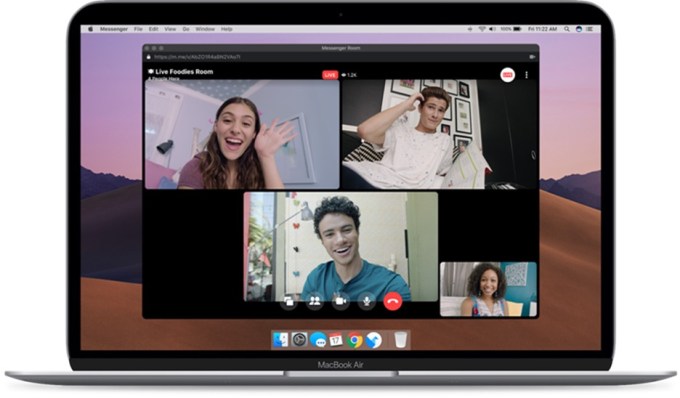
Facebook this week announced a new feature that it hopes will give it a better shot at challenging Zoom’s dominance on web conferencing that came about due to the pandemic. The company upgraded its Messenger Rooms group calls platform to support the ability to live broadcast calls to platforms like Facebook, YouTube and Twitch — a move that effectively combined Facebook’s live-streaming capabilities with group video chat. Facebook turned around the feature in a relatively short time, given it has only been a matter of months since Zoom has really taken off. That indicates Facebook understands the threat of online chat and socializing exiting its platform.

The goal with the new addition is to make it simpler to broadcast to social platforms, to encourage users to return. Even if they arrive in order to broadcast to competitors’ sites, like YouTube, the company understands that adding Facebook to the list of destinations will increase the output of live broadcasts on its own platform.

In addition, Facebook also this week announced that Messenger now lets you secure your chats with Touch ID or Face ID on iOS. Why don’t more apps offer this feature?

TikTok unveils a $200M fund to back U.S. creators, as it scrambles for a “Plan B”

LOS ANGELES, CA – AUGUST 01: A general view of the atmosphere during the TikTok US launch celebration at NeueHouse Hollywood on August 1, 2018 in Los Angeles, California. (Photo by Joe Scarnici/Getty Images)

As the U.S. government weighs a ban on the Chinese-headquartered app over privacy concerns, the company announced plans to hire 10,000 employees across the U.S. over the next three years and launched a $200 million fund to invest in new creators. The new fund is aimed at helping top creators in the U.S. supplement their earnings, and potentially find the next big TikTok star in the process. The platform will begin accepting applications from U.S.-based creators starting next month and will then distribute the capital over the coming year.

Meanwhile, TikTok parent company ByteDance continues to discuss a range of other options to keep its popular and profitable app alive in the U.S. The latest, according to The Information, is one that would have a small group of the company’s U.S. investors joining forces to buy a majority stake in TikTok.

The U.S government — and particularly the Trump administration — continues to be skeptical about TikTok’s China ties. This week, the U.S. House voted to ban federal employees from using the app on government-issued devices. The vote passed 336-71, as part of a package of bipartisan amendments to the National Defense Authorization Act.

Robinhood ends plan for a U.K. launch

Image Credits: Andrew Harrer/Bloomberg via Getty Images

Mobile investing app Robinhood said this week it would not be launching in the U.K., as planned. The company said it was now going to hold off on its global expansion plans to instead focus its efforts in its home market, the U.S. The company had already received over 250,000 sign-ups on its U.K. waitlist, which it says will now be deleted in line with local privacy laws. The company said it will transfer 10 U.K. employees to the U.S., but others will be let go.

The app has been more recently facing criticism in the U.S. for how it lures in young, inexperienced traders who then buy and sell some of the riskiest financial products on the market — at rates higher than other retail brokerage firms. With its hip and youthful design and social app-like features, such as confetti and emoji, Robinhood can make investing feel more like a game, The NYT reported in a recent feature. But the reality is that these inexperienced users are taking more speculative risks, sometimes with devastating results. One Robinhood user killed himself after seeing his balance drop to negative $730,000 — a figure that was higher, in part, due to some of his incomplete trades.

Google has its own ‘Onavo’

Image Credits: David Paul Morris/Bloomberg via Getty Images

Google today already allows Android app developers to collect usage data from devices where their app is installed, so it comes as no surprise that Google was doing this itself, too. The Information revealed Google’s program that allows it to access usage data on any device that has its Google apps pre-installed. Similar to Facebook’s Onavo, the data wasn’t just used to make improvements to Android, but was also used as a competitive advantage.

According to the report, Google had used the data to show how Google’s own services compared to rivals. This is what Facebook had used Onavo for, too — even leveraging those learnings to inform its acquisition strategy. APIs aren’t the only way large tech companies collect data on smartphone user habits. App intelligence firms like App Annie and Sensor Tower provide similar data to customers, obtained through a number of apps that downplay their true purpose, but really serve as data collection machines.

Data collection like this has been underway for years, but with the antitrust investigations now underway, the time may have come for regulators to actually do something about it.

Funding and M&A

  • Fintech startup Meemo came out of stealth and launched its social finance app with $10 million in seed funding. Investors including Saama Capital, Greycroft, Monashees and Sierra Ventures led the round with additional participation from Amit Singhal, Hans Tung and several former colleagues from Google and Snap.
  • Swiss keyboard startup Typewise raises $1 million seed round to build its “privacy-safe” next word prediction engine that works entirely offline. The round consists of $700,000 from more than a dozen local business angels; and $340,000 via the Swiss government through a mechanism akin to a research grant.
  • China’s Missfresh raises $495 million for its e-grocery app with deep WeChat integrations. The round was led by state-backed China International Capital Corporation. Other investors included ICBC International Securities, Tencent, Abu Dhabi Capital Group, Tiger Global and a fund managed by the government of Changshu county, home to Missfresh’s east China headquarters
  • PicsArt, a visual creative platform, acquired advanced video effects company D’efekt for an undisclosed sum.
  • Levitate raises $6 million for its “keep-in-touch” email marketing solution for small business that works across web and mobile. Investors include Tippet Venture Partners, Durham, North Carolina-based Bull City Venture Partners and angel investor Peter Gassner, the co-founder and CEO of Veeva Systems and investor in Zoom

Downloads

Dilims

Image Credits: Dilims

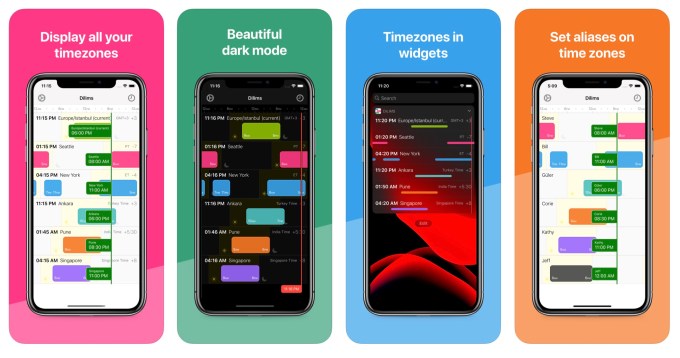
This beautifully designed indie iOS app called Dilims lets you display different time zones on one screen, and even name them with aliases or view them as a widget. The simple single-purpose utility is useful for anyone who has to work with teams or clients across time zones, and wants an easier way to see what time it is and where. For $2, that’s kind of a steal, too.

Dark Noise 2

Image Credits: Dark Noise

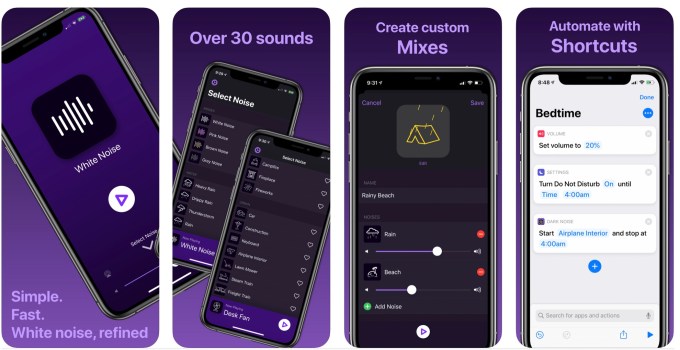
If you like to play ambient noise to help you focus, sleep or just relax, you’ll want to check out Dark Noise 2. This ambient noise app for iOS just got a big update, which adds new sounds, new icons and introduces iCloud syncing. Plus, it now allows you to create your own custom mix of ambient sounds so you can chill to the sounds of rain at the beach, for example, or whatever else you want to blend. The app is $5.99 on the App Store. 

Further Reading (and Listening)

  • Apple Kills IDFA: How Will the Fallout Really Affect Marketers?: Dig into the implications of the IDFA changes in the latest episode of the Mobile Presence podcast, in a discussion with Shamanth Rao, veteran growth marketer and CEO of RocketShip HQ, a full-service mobile user acquisition agency.
  • What Ever Happened to Digital Contact Tracing?: Lawfare takes a look at how the contact-tracing app landscape is shaping up, given the disappearance of contact tracing apps from the headlines. Though Apple and Google’s API was meant to encourage each country to build their own apps, the U.S. has instead taken a patchwork approach due to its fractured response to COVID-19. Today, there are a handful states with their own apps, and only some that plan to use Apple and Google’s technology. Many states have no plans for an app at all, turning instead to human-led contract tracing efforts.
  • Designed for iPad: What makes a good iPad app today? These things, says LookUp Design in a thoughtful post.

Tweets of the Week


from Amazon – TechCrunch https://ift.tt/2WSRask
via IFTTT

Bezos ‘can’t guarantee’ no anti-competitive activity as Congress catches him flat-footed

At today’s House Judiciary Committee hearing, Amazon CEO Jeff Bezos bungled attempts to assuage concerns that the company poaches ideas from its competitors, taking sustained fire from Rep. Pramila Jayapal (D-WA) and others. Faced with testimony from employees that there is “nobody enforcing” policies, resulting in “a candy shop” of seller data, Bezos admitted to what amounts to ignorance or complicity.

Jayapal’s interrogation was one of precious few substantive exchanges in a hearing dominated by tiresome grandstanding and uninformed or irrelevant lines of questions.

Amazon has been dogged for years with well-substantiated allegations that it uses its bird’s-eye position in online retail, much of which passes through its platform, to spot new products and categories and enter them using that inside information — often taking huge losses to undercut the existing players in the market.

Jayapal — who represents the district in which the company is headquartered and has gone head to head with the company numerous times — began by asking straight out whether Amazon does this (Wording of questions and answers has only been slightly edited for clarity.):

Jayapal: Does Amazon have access and use third party seller data when making business decisions?

Bezos: I can’t answer that question yes or no. I can tell you we have a policy against using seller-specific data to aid our private label business but I can’t guarantee you that that policy has never been violated.

In response, Jayapal cited a recent WSJ report citing multiple instances where Amazon had done just that:

Jayapal: You’re probably aware that an April 2020 report in the Wall Street Journal revealed that your company does access data on third party sellers both by reviewing data on popular individual products and sellers and making tiny categories that allowed your company to categorically access detailed seller information in a supposedly aggregate category do you deny that report?

Bezos: I’m familiar with the Wall Street Journal article you’re talking about. We continue to look into that very carefully, I’m not yet satisfied we’ve gotten to the bottom of it. It’s not as easy to do it as you think because some of the sources in the article are anonymous.

Jayapal: I’ll take that as a you’re not denying that.

“It’s a candy shop, everyone can have access to anything they want.”
Her next move was a damning quote from a former employee that Bezos seemed at a loss to counter.

Jayapal: A former Amazon employee and third party sales an recruitment told this committee, quote, “there’s a rule but there’s nobody enforcing or spot checking. They just say don’t help yourself to the data. It’s a candy shop, everyone can have access to anything they want.” Do category managers have access to non public data about third party products and businesses?

Bezos: Uh, here’s what I can tell you. We do have certain safeguards in place. we train people on the policy, we expect people to follow that policy the same we would with any others. It’s a voluntary policy [in that having such a policy is voluntary, not that it is voluntary to follow that policy, he clarified]. If we found that someone violated it, we would take action against them.

Jayapal: Well, there’s numerous reports and the committee has conducted interviews with former employees that confirm that there are employees that do have access to that data and are using it. If you thought you were actually enforcing these rules, do you think that that’s working? There’s credible reporting that has documented breaches of these rules you’ve put into place, and this committee has interviewed employees that say that these breaches typically occur.

WASHINGTON, DC - JULY 29: Rep. Pramila Jayapal, D-WA, speaks during the House Judiciary Subcommittee hearing on Antitrust, Commercial and Administrative Law on Online Platforms and Market Power in the Rayburn House office Building, July 29, 2020 on Capitol Hill in Washington, DC.

(Photo by Mandel Ngan-Pool/Getty Images)

After confirming that “aggregate” data could be on as little as a single seller under Amazon’s policy, she then began a lengthy presentation of why this was obviously a serious concern for competition:

Jayapal: Interviews with former employees have made it clear that that aggregate data essentially allows access to highly detailed data in those product categories – there’s the example of Fortem, a small business that had no direct competitors, except for Amazon Warehouse Deals, a resale clearance account that only sold 17 units. An Amazon employee accessed a detailed sales report on Fortem’s product with information on how much the company spent on advertising per unit and the cost to ship each trunk. And then Amazon launched its own competing products in October 2019. That’s a major loophole. And I go back to the general counsel’s statement to this committee very clearly that there was no access to this data, that Amazon does not use that data for its own benefit. And I’m now hearing you say, well you’re not so sure that’s going on.

You have access to the entirety of sellers pricing and inventory information, past, present and future, and you dictate the participation of third party sellers on your platform. So you can set the rules of the game for your competitors but not actually follow those rules yourself. Do you think that’s fair to the mom and pop third party bus that are trying to sell on your platform?

Bezos: I appreciate that question and I like it a lot, because I really wanted a chance to address that. I’m very proud of what we’ve done for third party sellers on this platform…

Sensing Bezos was bloviating and/or playing for time, Jayapal cut him off to make her final point:

Jayapal: So you might allow third party sellers onto your platform, but if you’re continuously monitoring the data to make sure that they’re never gonna get big enough that they can compete with you, that is actually the concern that the committee has. The whole goal of this committee’s work is to make sure there are more Amazons, more Apples, more companies that get to innovate and small businesses that get to thrive. That is why we need to regulate these marketplaces, so that no company has a platform so dominant that it is essentially a monopoly.

“Mr. Bezos, did you personally sign off on the plan to raise prices after Amazon eliminated its competition?” “I don’t remember that at all.”
Rep. Jayapal’s questions seemed to open the season on Bezos. Representative Mary Scanlon (D-PA) soon highlighted Amazon’s willingness to lose hundreds of millions of dollars to kneecap the competing Diapers.com:

Scanlon: The price war against Diapers.com worked, and within a few months it was struggling, and so Amazon bought it. After buying your leading competitor here, Amazon cut promotions like Amazon.mom and the steep discounts it used to lure customers away from Diapers.com, and then increase the prices of diapers for new moms and dads. Mr. Bezos, did you personally sign off on the plan to raise prices after Amazon eliminated its competition?

Bezos: I don’t remember that at all.  What I remember is that we matched competitors’ prices and I believe we followed diapers.com. This was 11 years ago so you’re asking a lot of my memory.

Then the Chairman, Rep. David Ciccilline (D-RI), took the opportunity to get some more direct answers on Rep. Jayapal’s line of questions.

House Judiciary Subcommittee on Antitrust, Commercial and Administrative Law Chair David Cicilline, D-RI, speaks during a hearing on "Online Platforms and Market Power" in the Rayburn House office Building on Capitol Hill in Washington, DC on July 29, 2020. (Photo by MANDEL NGAN/POOL/AFP via Getty Images)

Cicilline: Isn’t it an inherent conflict of interest for Amazon to produce and sell products on its platform that compete directly with third party sellers, particularly when you, Amazon, set the rules of the game?

Bezos: Thank you… no, I don’t believe it is. We have… the consumer is ultimately the one making the decisions about what to buy, what price to buy it at, who to buy it from.

Cicilline: That’s not the question, Mr. Bezos. The question is is there an inherent conflict of interest. …You said you can’t guarantee that the policy of not sharing third party sellers data with Amazon’s own line hasn’t been violated, you can’t be certain. Can you please explain that to me? Can you list examples of when that policy has been violated? Shouldn’t third parties know for sure that data isn’t being shared with your own line of competitors?

Bezos: What think is important to understand is we have a policy against using the individual seller data to compete with our private label products.

Cicilline: You couldn’t assure Ms. Jayapal that that policy isn’t violated routinely!

Bezos: Well, I mean, we are investigating that. I do not want to go beyond what I know right now, but we are as a result of that Wall Street Journal article, we are looking at that very carefully.

The Committee’s questioning of Google’s Sundar Pichai, Facebook’s Mark Zuckerberg, and Apple’s Tim Cook was nowhere near this level, but the Amazon portions were effective — if only to see one of the world’s richest and most powerful people stumbling over his words, unable or unwilling to answer basic questions. Bezos has little experience with these hearings and it showed — no doubt this has been as informative for him as it has been for Congress.


from Amazon – TechCrunch https://ift.tt/30WqAzK
via IFTTT

Clear today!

With a high of F and a low of 64F. Currently, it's 79F and Clear outside. Current wind speeds: 13 from the Southeast Pollen: 3 S...